Standards-Aligned Reading Resources for Every Classroom
Literacy Central gives educators over 30,000 free resources tied directly to the books your students already love,
built on the science of reading and designed with practicing teachers in mind.
STANDARDS ALIGNMENT
Every Resource is tied to what you're already required to teach.
Literacy Central doesn't ask you to rethink your curriculum. It fits into what you're already doing.
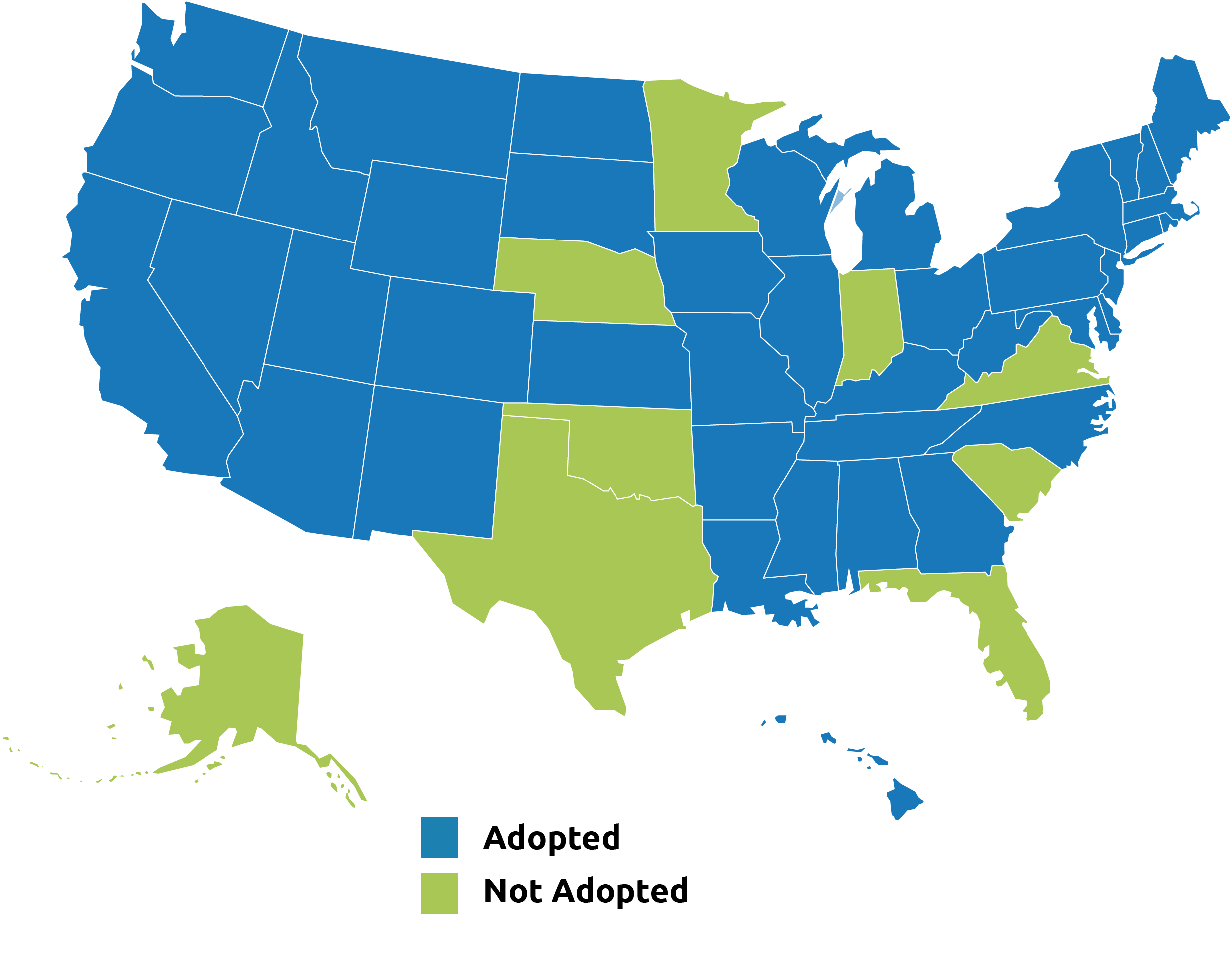
Search by standard, grade level, Lexile, or book title. You'll find materials ready to use in your classroom tomorrow. The map of the United States below shows Common Core State Standards adoption in blue.
Searchable by LexileRIF tags every resource with Lexile level (when applicable), so you can quickly find materials that match the grade level you teach, without extra guesswork or preparation. | Tied to CCSSMaterials match ELA, social studies, and science standards. Lesson plans and activities support what you need to teach and assess. | Filterable by Grade & ThemeSearch by grade band (Pre-K through 12), topic, cultural theme, or student need, including bilingual materials and resources for developing readers, to find exactly what fits your class. | Tied to the Books You Already UseResources match popular and frequently assigned titles, from Charlotte's Web to Wonder. Your assigned texts instantly unlock a full toolkit of aligned support materials. | Curated by Expert PartnersPartners like the National Head Start Association and the American Psychological Association review our book collections. This ensures the materials meet high standards for quality, diversity, and age-appropriate development. |
DESIGNED BY LITERACY EXPERTS
Created by people who understand how children learn to read.
Every resource in Literacy Central is built with intentionality. RIF's literacy experts and educator partners shaped these tools around real classroom needs, not just what looks good on a worksheet.
Grounded in research-backed practice
Each resource type is research backed, from lesson plans to reading logs. These practices help build reading skills, comprehension, and motivation.
Practical for real classrooms
Materials are print-ready and immediately usable. No extensive prep time required. Lesson plan guides include vocabulary support, discussion prompts, and extension ideas built right in.
Professional development embedded in the tools
RIF's resources are designed to support educators in understanding and applying best practices, not just delivering content, but building capacity for stronger literacy instruction over time.
Developed alongside diverse communities
Resources reflect a wide range of cultures, languages, and learning contexts. Bilingual materials and diverse book collections ensure every student can see themselves as a reader.
SCIENCE OF READING
What is the science of reading, and how does Literacy Central support it?
The science of reading is a large body of research from psychology, linguistics, and education. It explains how the brain learns to read. Literacy Central resources areis built to support every dimension of this research.
A quick plain-language primer for educators
Reading isn't a natural skill; it must be explicitly taught. Decades of research have identified key skills children need. They must recognize words on the page (decoding).
They must also understand what those words mean in context (language comprehension). Strong literacy instruction addresses both. Literacy Central's resources help teachers build these skills. They use engaging, book-based materials that make practice feel purposeful, not rote.
Phonological AwarenessHearing and working with the sounds in spoken language, the foundation of decoding.
| Phonics & DecodingUnderstanding how letters map to sounds so students can read unfamiliar words.
| VocabularyBuilding word knowledge so students understand what they read and can talk and write about it.
| Reading FluencyReading accurately, at a good pace, and with expression so mental energy goes to meaning.
| Reading ComprehensionUnderstanding, interpreting, and thinking critically about what was read.
|
Joy of reading is not separate from the science — it's part of it.
The science of reading is a large body of research from psychology, linguistics, and education. It explains how the brain learns to read. Literacy Central supports every dimension of this research.
WHAT'S INSIDE
A full toolkit: All in one place, all completely free.
Every resource in Literacy Central is tied to a specific book title. That means you get a complete package of support materials the moment you find a book your students are reading.


HOW IT WORKS
Register and ready to use. No training required.
Literacy Central is designed to be intuitive for busy educators. Here's how to get started.
Step 1: Create your free accountSign up at rif.org/literacy-central. No subscription, no credit card, no cost. Your account lets you save favorites, build book lists, and track student progress. | Step 2: Search by book, standard, or gradeType in a title, filter by Lexile range or grade level, or browse by theme. The search pulls up every available resource tied to that book or topic. | Step 3: Download and use immediatelyMost materials are print-ready PDFs. No reformatting, no adaptation needed! Just download and hand to students or load onto your classroom display. | Step 4: Track, share, and build book listsOrganize your favorite resources, create custom book lists for your class, and share them with colleagues or families to extend reading beyond the classroom. |
Literacy Central is designed to be intuitive for busy educators. Here's how to get started.