Reading the Pictures
Ever notice how quickly young readers flip past the pictures in a book? In this guest post, veteran educator Carol Jago makes the case for slowing down and reading illustrations as closely as we read words, and she shares a simple classroom routine for doing it, using the 2026 Caldecott Medal winner Fireworks as an example. Carol is a past president of the National Council of Teachers of English and recently hosted RIF's webinar, Reading Pictures: Building Visual Literacy Through Picture Books. Her approach is a great fit for teachers and families alike who want to build patience, curiosity, and stronger comprehension in kids.
At a moment when so many teachers remark upon their students’ short attention spans and reluctance to linger over a book, could the antidote be a lesson on close reading illustrations?
I want to be careful here not to suggest that children use illustrations to guess at the meaning of the text. Rather I am suggesting that we forestall turning the pages hastily during a read-aloud and instead invest time exploring the artwork. In a variation of the kind of close reading that we encourage students to do with the words on the page, invite them to examine the details, colors, and contours the artist has chosen to accompany a written text.
The protocol for such a lesson can be as simple as asking students to look at the illustration for two minutes. It will seem an eternity. As children concentrate on the page, ask them to list 10 things that they notice. The number here is arbitrary, but it encourages students to look closely for details they miss in a cursory glance. Then have students share with a partner the things they saw, explaining as they do why they think the illustrator made these artistic “moves.” When conversations begin to flag, bring the whole class together to talk about how they think the image contributes to the story or to the author’s message.
A handy way to think about this is:
- What do I see?
- Why do I see it?
- What else do I see and think?
Again and again I have watched students take extraordinary interpretive risks with an illustration, demonstrating insight that they sometimes struggle to express based upon words alone. It is as though children feel more confident expressing a personal interpretation of an image than they do when asked to analyze text. Students also seem more willing to believe me when I tell them that I don’t know “the answer” to what an illustration means any more than they do.
Complex texts like the 2026 Caldecott Medal winner Fireworks by Matthew Burgess and illustrated by Cátia Chien hold details, relationships, and structures that take time to perceive. Just because readers have looked at a page doesn’t mean they have SEEN it. By focusing students’ attention upon a single page, a carefully created work of art, we can help them begin to value critical attention, patient investigation, and skepticism towards immediate surface appearances. As students slow down to examine details and reflect upon their significance, comprehension grows. They are building reading muscles.
The fireworks in Cátia Chien’s illustrations are both representations of literal Fourth of July fireworks that a brother and sister anticipate will soon fill the sky in Chinatown as well as metaphorical. That is, the colorful explosions visually suggest wonder, excitement, and emotional intensity. Fireworks are also fleeting. Asking children to ponder how a page like the one below makes them feel offers the opportunity to articulate how line, color, and words work together to create those feelings in reader.
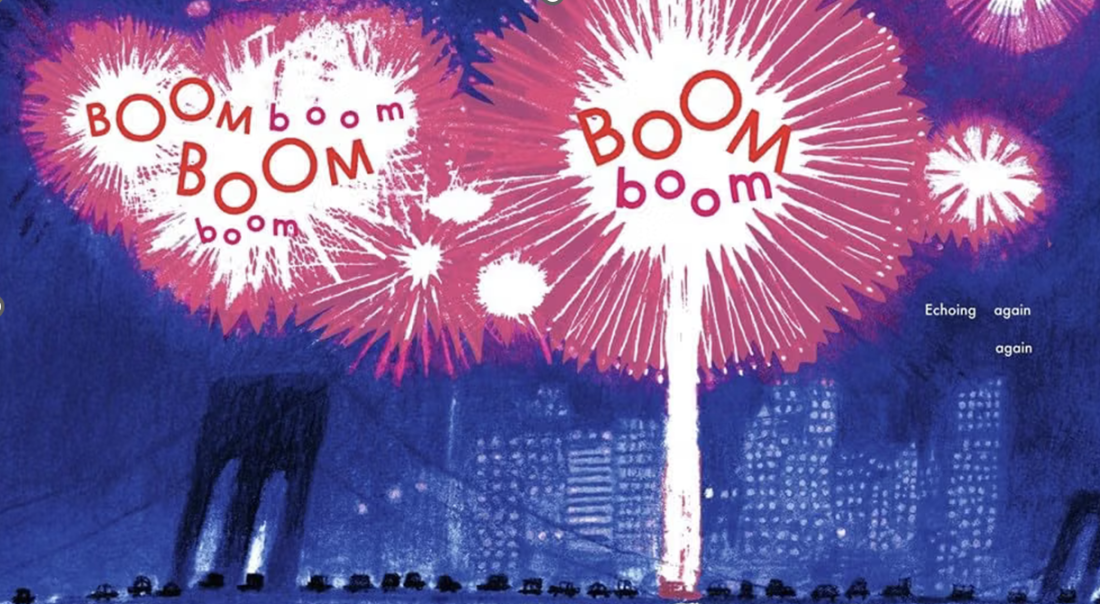
Growing up in an increasingly visual world, today’s students need to understand how images can shape their responses to a text. Picture books offer the perfect launch pad for building essential visual literacy.
Carol Jago is a long-time teacher, past president of the National Council of Tteachers of English, and associate director of the California Reading and Literature Project at UCLA. She is the author of numerous books including The Book in Question: Why and How Reading Is in Crisis.
Get Inspired—Read RIF's Blog
Stay connected with the heart of our mission by exploring our blog. We feature stories from communities we serve, literacy tips for educators and families, and updates on how Reading Is Fundamental is helping children across the nation discover the joy of reading.