National Reading Month
About National Reading Month
National Reading Month is a nationwide celebration every March that encourages children, families, and communities to make reading a daily habit. At Reading Is Fundamental (RIF), we use this month to inspire joyful reading experiences, promote literacy engagement, and share free, accessible resources for educators and families. With 25 million children in the U.S. unable to read proficiently, this month-long celebration is an essential opportunity to support every child’s path to confidence, curiosity, and future success.
Frequently Asked Questions
What is National Reading Month?
National Reading Month is an annual celebration dedicated to fostering a love of reading. Schools, families, libraries, and community partners participate through reading challenges, literacy events, story hours, and classroom activities. This month highlights the importance of reading and reinforces how strong literacy skills shape academic performance and lifelong learning.
When is National Reading Month?
National Reading Month takes place every March, with Read Across America Day celebrated on March 2.
How can families celebrate National Reading Month at home?
Families can read together daily, visit local libraries, host a family book night, explore RIF’s free reading resources, and participate in March reading challenges.
How can teachers celebrate National Reading Month in the classroom?
Teachers can incorporate themed reading activities, classroom challenges, visit the school library, author studies, daily read-alouds, and RIF’s Literacy Central and read-aloud videos.
Teachers and families can join RIF’s Rally to Read reading challenge to foster the joy of reading with six months of exciting themes, free online read-alouds from your favorite authors, and lots of engaging, literacy-building reading activities.
What are Read-Alouds?
Reading aloud to children builds foundational literacy and language skills. A read-aloud is a chance for all children to learn new things in a safe environment. Reading a loud enables children to explore topics that interest them and that they can reflect upon. If a child makes an emotional connection to a topic, it is more likely to be remembered. The benefits of reading aloud include:
- Vocabulary building
- Promotes bonding
- Builds connections
- Strengthen cognition
- Increases attention
- Provides enjoyment
RIF has a collection of read-aloud videos for you to explore, watch them today.
Why is reading at home important?
Daily at-home reading builds vocabulary, strengthens comprehension, and boosts confidence. Even 15 minutes a day has measurable results for literacy growth.
Does Reading Is Fundamental offer free resources for National Reading Month?
Yes, RIF provides free booklists, printable activities, reading calendars, themed collections, and digital learning tools through Literacy Central.
Where can I find free books for kids during National Reading Month?
RIF offers many free digital books, stories, and related activities through Skybrary and leveled reading passages on Literacy Central.
Skybrary: Free Books for Kids
Skybrary is Reading Is Fundamental’s (RIF) interactive, ad-free kids’ reading app, which inspires the joy of reading by providing access to endless literary adventures.
Skybrary includes virtual field trips, standards-aligned content, offline access, and 100 free books for kids, including the option to upgrade to over 1,000 expert-selected titles.
Children can enjoy a diverse collection of stories, islands, and fun with RIF’s refreshed reading app specially designed for young users.
Visit the website or download the app today and have plenty of books to read during national reading month and beyond.
Daily Reading Activities for Kids
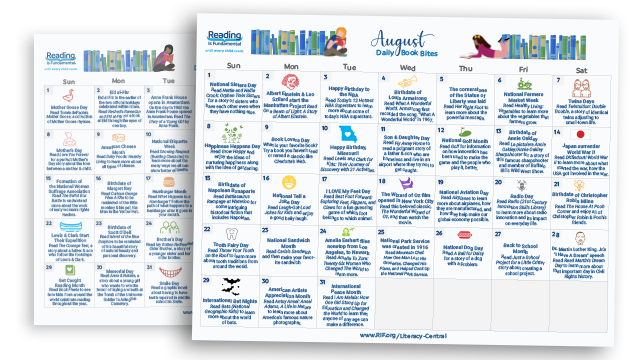
Encourage children to make reading part of their daily routine. RIF’s printable activity calendar includes themed prompts, reading tasks, and creative literacy activities that keep kids motivated throughout the month. Perfect for classrooms, families, and after-school programs.
Downloadable Tools & Printable
RIF provides free resources to support National Reading Month:
Printable reading calendars
Reading logs for all ages
Certificates and bookmarks
Literacy worksheets and activities
These resources make it easy to engage children and support reading habits all month long.
Reading Webinars and Video Resources
RIF offers free webinars and videos with practical strategies for educators, families, and community partners. Topics include engaging reluctant readers, building reading routines, and implementing literacy programs. All recordings are available at any time.
Read Aloud Every Day in Every Way
Read Aloud, Reach Every Learner
Why Reading Matters
More than 25 million children in the U.S. lack proficient reading skills, limiting their academic success and future opportunities. National Reading Month brings national attention to this crisis and encourages families, educators, and communities to take action. When children have access to books and reading support, they build stronger skills, confidence, and lifelong learning habits.
Get Involved with RIF All Year
Continue supporting literacy beyond National Reading Month:
Explore RIF's digital literacy resources
Join reading programs such as Rally to Read
Volunteer or partner with local schools
Donate to help provide books to children nationwide
Sign up for our newsletter or subscribe to our text messages to receive reading resources right to your device.
March 1
Set a reading goal for your child this month. Decide how many books and track them by making a fun chart or use RIF’s Reading Log at Printable Reading Logs and Certificates | RIF.org. Make all kinds of books readily available to your child. Get the entire family involved with each member setting a March reading goal.
March 2
Every child needs to see that reading is important. Whenever you have free time, are looking for an activity for quiet play or there’s stormy weather outside, suggest reading! Adults can set a good example by showing your kids you are a reader too. Read magazines, newspapers, and books in front of your children. This type of modeling will be powerful as children get older and are able to read independently. They’ll see how they can incorporate reading into their daily lives even as other activities demand their attention.
RIF is partnering with The Week Junior, a news magazine for children grades 4-8 to offer our RIF community the opportunity to read one free edition to celebrate National Reading Month and the Week Jr.’s one year anniversary. Every issue is filled with news, science, animals, nature, sports, entertainment and more. Enjoy this issue with your child today
March 3
Create a special reading area in your home: a designated, cozy location to enjoy a good story where a selection of great books is always at arm’s reach. And, kids love to create reading forts with their favorite blankets and pillow and of course a flashlight. Sometimes books are best when read in a cozy spot!
March 4
Ask your child to tell you a story, describing an event in his or her life. Talking about their experiences helps children think about and process them. Giving detailed descriptions and telling complete stories helps children learn about story structure and sequencing; what happens in the beginning, middle and end of a story. These skills set a foundation for reading. They can tell you real stories about their lives or make up stories using their imaginations.
March 5
Read aloud to your child every day even when they are babies. Bring a book to life by using a different voice for each character, consider dressing up like one of the characters or using puppets or stuffed toys related to the story, ask open-ended questions such as “how do you think the character felt?” and ask your child to make predictions about the plot, the characters, and the setting. RIF offers many resources on how to make the most of your read aloud time.
March 6
Did you know grocery shopping can also be a way to encourage reading and writing? At the store, help your child figure out the first letter of specific brands. Then together go on a hunt to find foods from those brands. Or, use the aisle markers with your child to find items. Even have your child (if age appropriate) write out grocery lists.
March 7
Cooking together with your child is a fun and special way to develop literacy skills. Show your child how to read a recipe – looking at measurements, instructions for preparation, and order of steps. As you prepare the recipe, look at the labels on ingredients together. You can even make a family cookbook of favorite recipes you love to cook and enjoy together. Plus, you can develop oral literacy by talking about family recipes and cooking tips.
March 8
Point out environmental print to your child – this includes any time you see text outside your home – think street signs, posters in buildings, and even flyers at the grocery store. Note signage during nature walks and other outings. Ask your child to point out print outside of the home too.
March 9
Nursery rhymes play a critical role in language and literacy development. Rhymes help children develop an understanding of the patterns of language and understand the sounds and blends that are the building blocks of words. Sing and rhyme with your child as they learn about sounds and syllables. Choose songs with rhymes and word play. Playing rhyming games with your child such has what other words sound like “honey.” Challenge your child to sing or say rhymes as fast as they can and get silly together.
March 10
Write with your child. Provide a variety of writing materials (such as chalk, markers, crayons) and encourage your child to draw and write on their own. Encourage your child to practice letters and sight words, write thank you notes, make to-do lists, and even create their own stories to share with the family.
March 11
Tie literacy to art for a fun way to encourage reading. You could visit an art museum together (based on COVID-19 guidelines) and use storytelling to explain what is happening in the artwork. Allow your child to interpret the artwork however he or she views it. Have your child create their own drawings, painting, sculptures and even instillation pieces made from recyclables in your home. Explain their art with sentence strips on which your child dictates to you what their artwork is about (consider making a video in which the children can tell a story about their artwork).
March 12
Visit the library and/or bookstore often (based on COVID-19 guidelines), making trips as often as you can. Help your child sign up for his or her own library card – an exciting day when they can start to choose and check out their own books. Take advantage of library programs, such as read-alouds and family book clubs. There are even many online read-aloud opportunities. Find some of RIF’s latest read alouds at www.rif.org/literacy-central/read-aloud-collection.
March 13
Get a set of dice and play Read, Roll and Tell. After reading a story, roll the dice. Based on the number rolled, have your child answer the related question. Roll three times. Here are the dice number questions: (1) Talk about where the story takes place. (2) Identify and describe the main character. (3) Talk about when the story takes place. (4) Talk about your favorite part of the story. (5) Talk about a problem that took place in the story. (6) Talk about what this story makes you think of when reading it.
March 14
Encourage your child to read all types of books across many genres including picture books, chapter books, comic books, drawing books and more! Don’t forget to mix in some nonfiction. Make it exciting – use the RIF 40 book reading challenge to get your child started.
Magazines are also a great opportunity to encourage reading. RIF is partnering with The Week Junior, a news magazine for children grades 4-8 to offer our RIF community the opportunity to read one free edition to celebrate National Reading Month and the Week Jr.’s one year anniversary. Every issue is filled with news, science, animals, nature, sports, entertainment and more. Enjoy this issue with your child today.
March 15
Encourage vocabulary development using fun games such as word searches, matching games and criss cross puzzles. RIF makes it easy to create these to use in class or at home at Puzzle Creator Interactive and Printable | RIF.org
March 16
Before reading a book with your child, show the cover and introduce the title, author and illustrator. ask your child what they think will happen in the book, and suggest things your child can look or listen for during the story. Additional questions to ask before reading a book with your child include: (1) What do you think this book is about and why, (2) Where do you think the story takes place? (3) Have you ever read anything like this before, (4) Discuss things that your child may have in common with the characters or setting in the story.
March 17
After reading a book with your child, here are some questions to ask to support their comprehension: (1) What was your favorite part of the story? Why? (2) Who was the most important character? Why? (3) What was the problem in the story? How was it solved? (4) Does this book remind you of another book? Why? (5) How did the story make you feel? and (6) Do you remember a time when you….? What happened?
March 18
Inspire your child to read with engaging activities you can find in RIF Book Bingo that help them play along as they read their favorite stories.
March 19
Have your child write an acrostic poem using the letter in his or her name. Each letter should describe your child. Here’s an example for Stella: Sweet, Talkative, Eager, Living, Likes to Learn, Adventurous
March 20
Create a reading treasure hunt for your child today. For the treasure, pick something you want them to find. Leave pictures (for younger children) or word clues to follow to reach the treasure. Your turn, have them do the same for you.
March 21
When reading a book with your child, before starting flip through the pages and point out the illustrations and make predictions based on what you both see in the book (be careful not to give away the ending)!
March 22
How about starting a books for breakfast routine on your weekends? Make reading a part of your weekend breakfast routine. While you wait for the toast to pop, or cereal to hit the bowl, have your child read a couple of pages from their favorite book. Talk as a family about the book while you enjoy your breakfast.
March 23
Make reading a daily habit at home. Your child can track their reading each day with the RIF reading log and you can reward them with a fun reading certificate. Celebrate that your child is a proud RIF reader!
Looking for something new to read? RIF is partnering with The Week Junior, a news magazine for children grades 4-8 to offer our RIF community the opportunity to read one free edition to celebrate National Reading Month and the Week Jr.’s one year anniversary. Every issue is filled with news, science, animals, nature, sports, entertainment and more. Enjoy this issue with your child today.
March 24
There are lots of reading strategies for your child to take control of their own reading and get through tough words. Remind them they can sound it out, look for a base word, chunk it, try a different sound, reread, use picture clues, use context cues, and use their background knowledge.
March 25
Use the 3:2:1 strategy to get your child or student engaged in a book. Write down 3 things they learned, 2 things that are interesting and 1 question they have. These questions boost engagement while improving reading comprehension.
March 26
Create a word wall to help your child work on their spelling, vocabulary and reading skills. Your child can add to it everyday and make sure you refer to it often.
March 27
Playing games can help a child with reading. Try playing I Spy. Simply pick an object and describe it by using the first letter of the object such as “I spy with my little eye, something that begins with the letter P.”
March 28
Make waiting time, reading time. Be sure to keep a couple of books in the car for your child to read as you drive, and always bring some along to read while you wait for the doctor or dentist.
March 29
The End Game: After you finish reading a story with your child, have he or she put themselves in the author’s shoes and think about how they may have changed the ending. Have your child share their new story ending with a family member by retelling the new story version or writing it down.
March 30
Promote literacy with your child by turning on the captions when watching an online video, a show on television or a movie. It will help your child make a connection between the words they are hearing and the words they’re reading on the screen. It’s also a great way for them to identify any new vocabulary they hear. Next time they read that word in a text, they’ll be more likely to correctly identify it.
March 31
A book club is a great way to encourage your child to read and share the love of reading with friends. Pick a time each week for the book club to meet, each child can take turns picking out a book, provide a few snacks and encourage a lively discussion.
In addition, to the tips and ideas on this page, we invite you to visit Literacy Central for book activities, games, and tools to motivate your students and children to read along with RIF all month long!
For reading fun, visit www.RIF.org/Literacy-Central
Set a goal to read daily and track your child’s progress here: www.RIF.org/Literacy-Central/Reading-Logs